
Votesphere®
You know what you want from government. Now watch your voice improve your world.
We matter and so do our priorities and preferences.
Votesphere is a free civic instrument for finding shared solutions to shared problems: ask and answer in your own terms, keep your record, and see where your community — and the country — truly stands.
Free · In your browser · No account to start
Here's what's different about this place.
01 · Said
Say it in your own terms.
You are asked about politics constantly — by pollsters, by pundits, by whatever is in front of you at the time. But the questions are written by someone else, in someone else's words, and the answer you give disappears into a number you never see again. And the one channel that is always open — social media — turns every opinion into an argument.
None of these channels is an instrument for saying what you want — and having it received, kept, and shown. Votesphere turns the instrument around.
A dedicated app can be much better than any poll. Polls lack nuance. They are not universal. Polls do not allow us to change or explain our answers.
And unlike every channel above — what you say here stays yours.
02 · Kept
Yours to keep. Yours to revise.
Your answers persist. Come back in a month, a year, an election later — revise any of your positions, and the record moves with you. What accumulates is a portrait of your politics in full, assembled entirely out of things you said.
For as long as anyone can remember, describing your politics has meant picking from words somebody else defined. The sphere is a new language for political identity — one you write yourself, position by position, at whatever detail you care to give it.
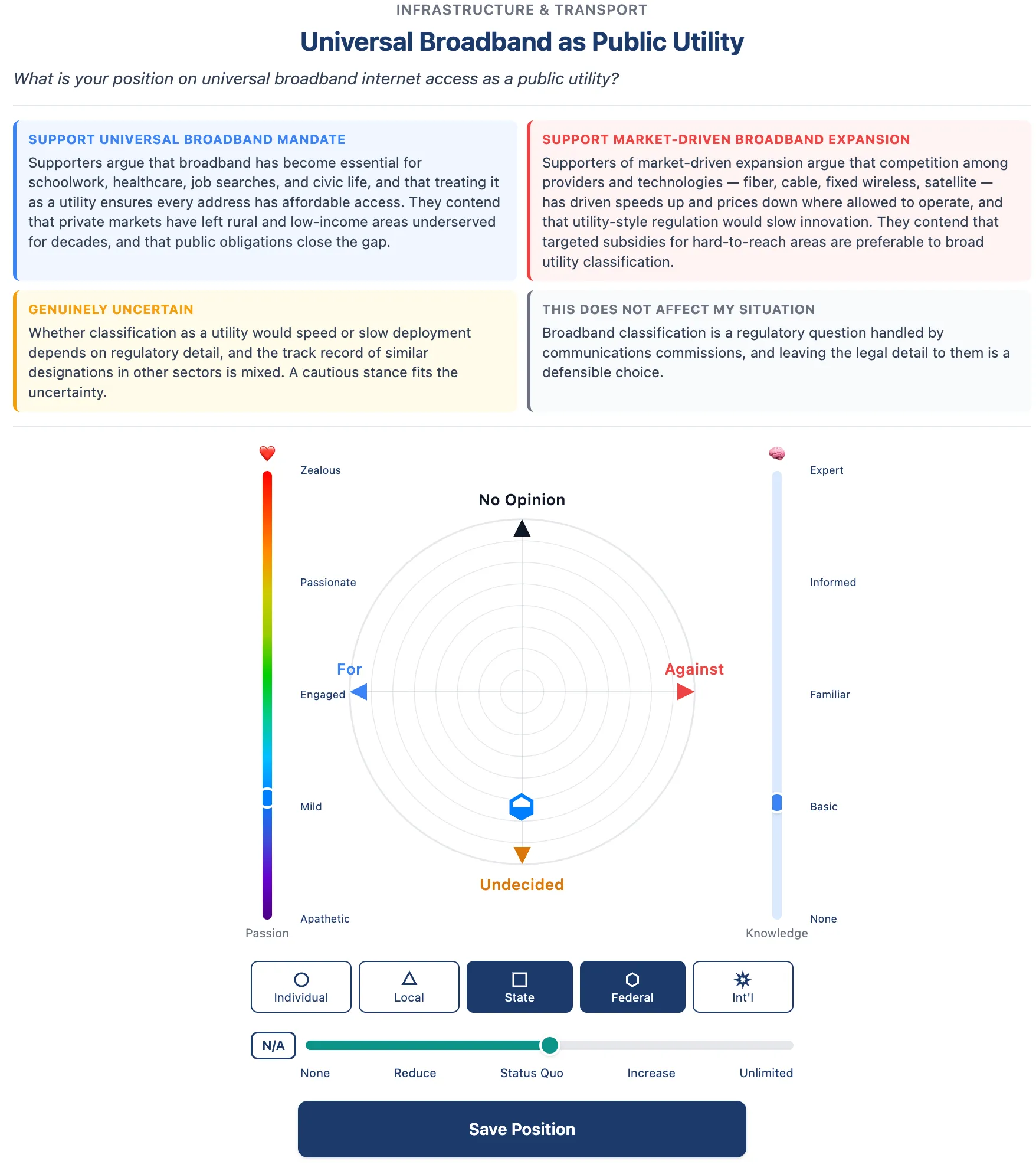
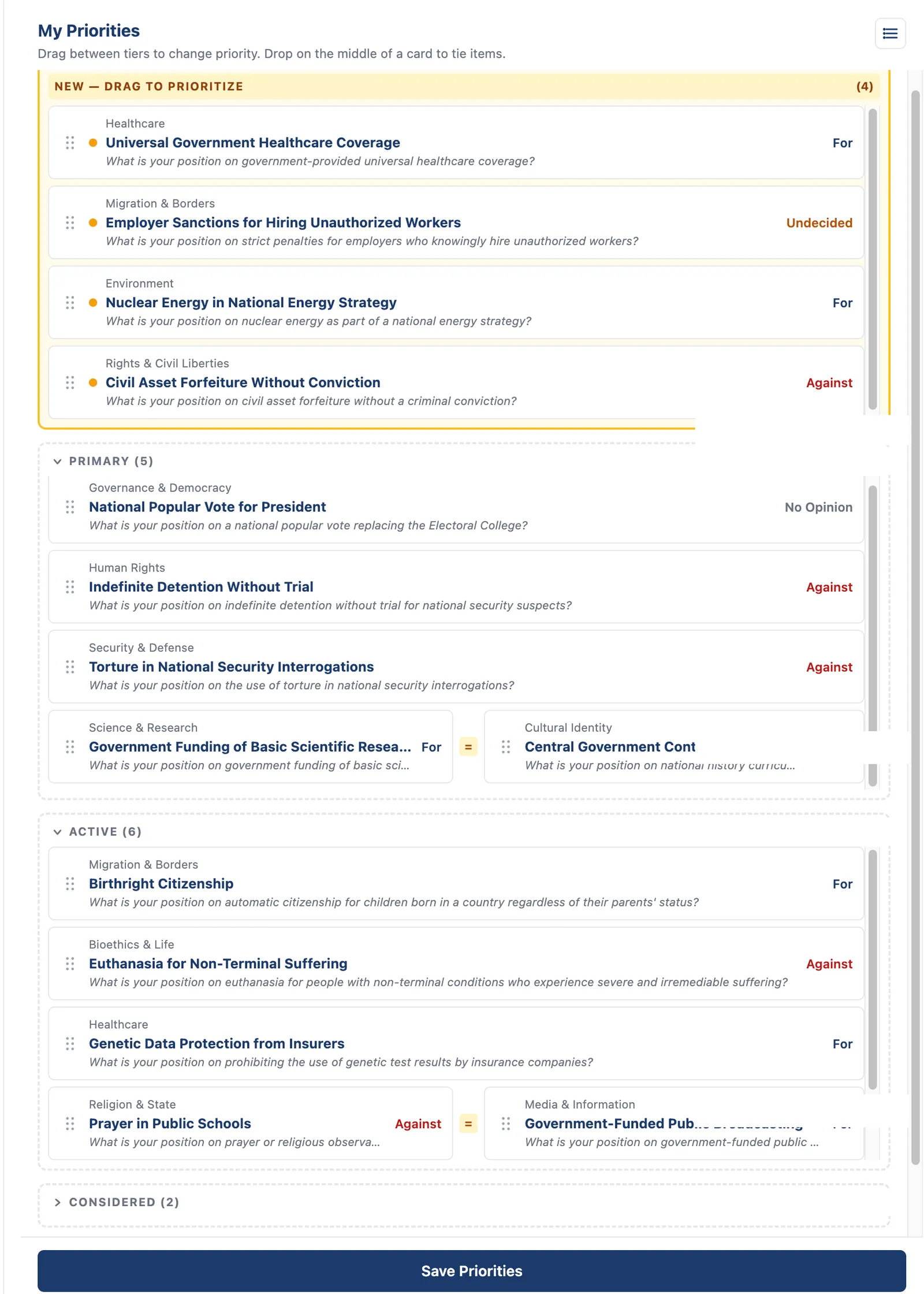
The question first, then the cases.
Every issue states the question, then presents the case for each side — support, opposition, genuine uncertainty, and “doesn't affect me” — before you answer. Nobody is asked to have an opinion cold.
Where you put it means something.
Near the center, a core conviction; toward the edge, more lightly held. And how high an issue sits among your priorities is yours to set — no one ranks your concerns for you.
Each added choice earns its place.
Passion separates what you would march for from what you merely prefer. Knowledge lets you calibrate your own confidence. Governance says who should act — your town, your state, the nation, the world. Spending says what it is worth to you.
And if a blank plane feels like a lot, there's a second way in.
03 · The quizzes
Start with a quiz, if you'd rather.
The quizzes are a friendlier front door: a guided way to find where you stand, one plain question at a time. Your answers build the same record. Plain choices, no wrong answers, a few minutes end to end. The set keeps growing, with new ones arriving regularly.
The Self-Discovery Quiz is the flagship. What comes back is a portrait, never a diagnosis: the shape of what you already think, drawn entirely from your own answers. The historical and modern figures it matches you with are meant to be fun — a conversation starter, not a verdict.
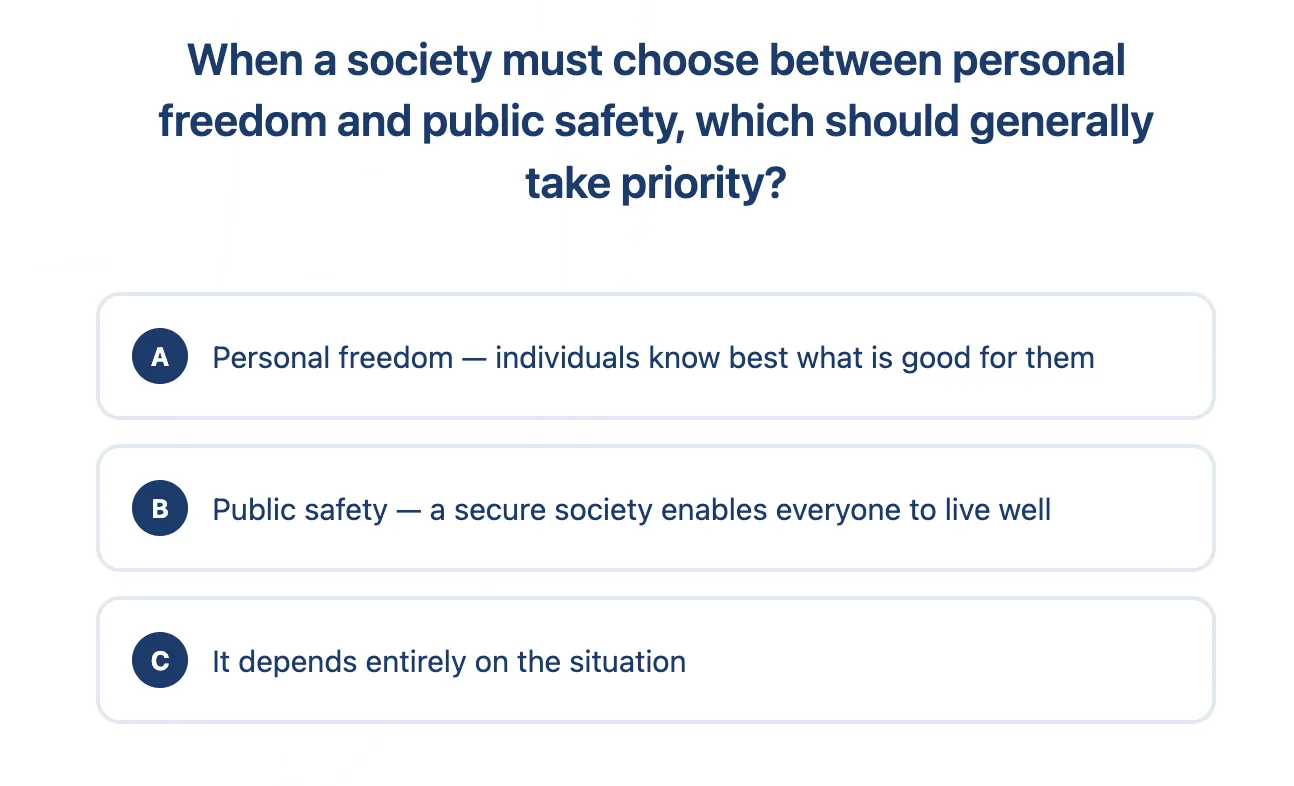
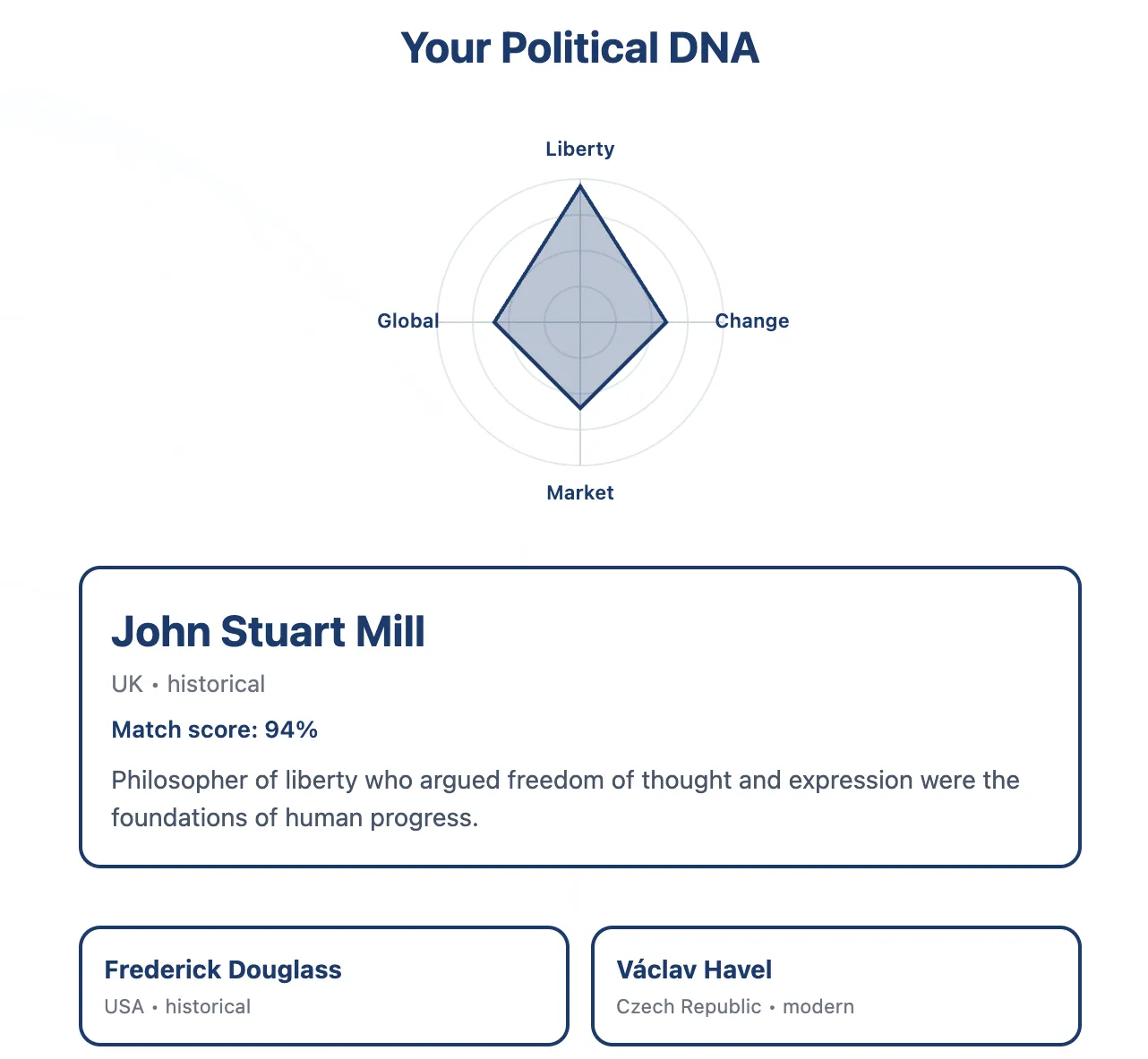
Now imagine hundreds, thousands, millions of those records in one picture.
04 · Counted
Counted — and open to inspection.
One record holds one person's priorities in full. Put hundreds, thousands, or millions of them in the same picture and something becomes visible that no poll can show: where a community genuinely agrees, where it genuinely divides, and how solid each of those findings really is.
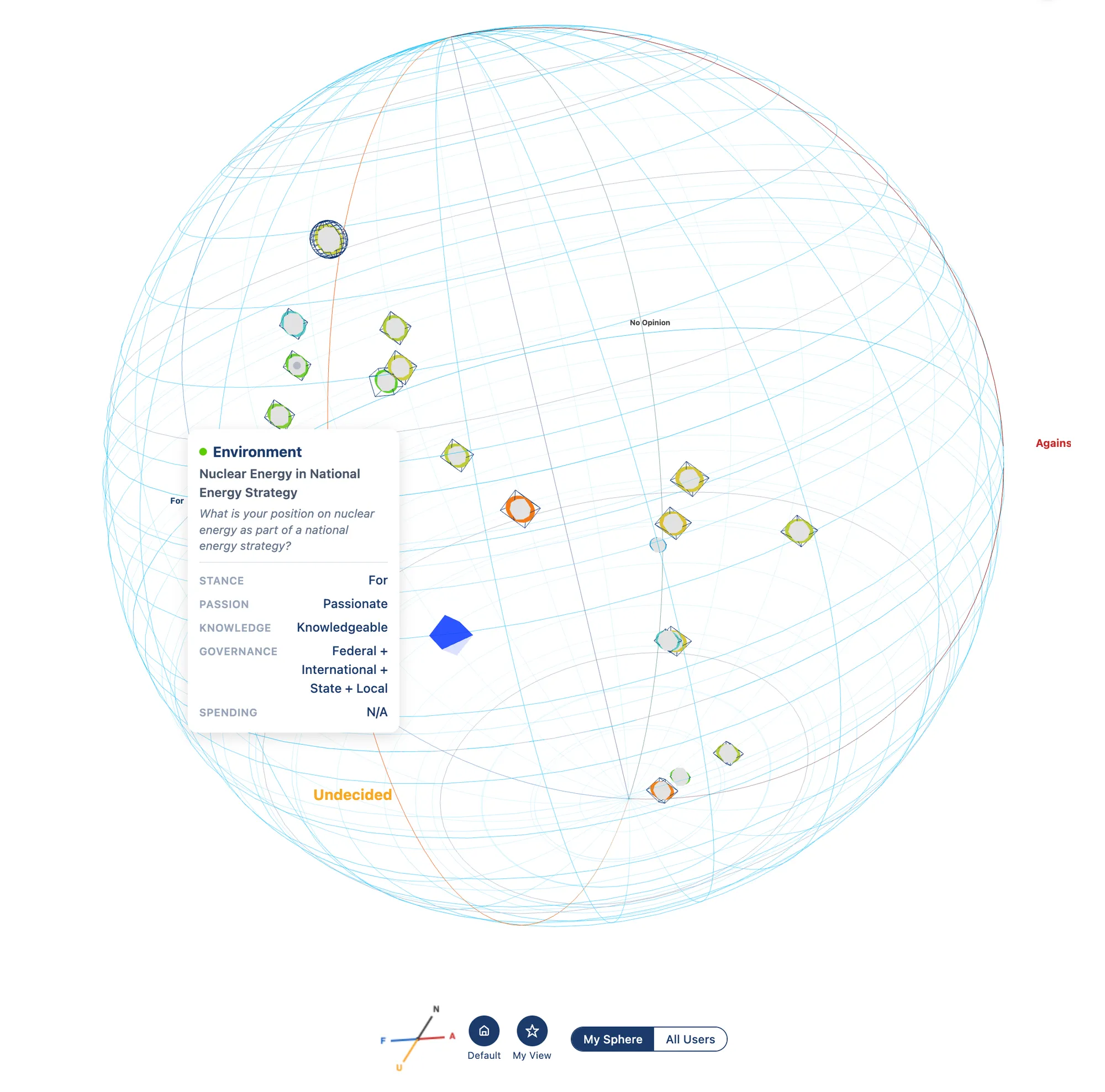
Today
Your own sphere, complete.
Every position you have taken, held in one picture and open to you completely — yours to read, revise, and share. This part exists now.
As participation grows
Your community, then your state, then the country.
Local questions reach a legible picture soonest, because a town needs far fewer voices than a nation does. Every picture will say plainly how solid it is. The public picture is open to everyone, and deeper analysis is available to anyone who wishes to subscribe.
As it comes
Reporting anyone can read.
Open analytics, free to everyone, with deeper analysis and subscriber-commissioned questions to follow.
05 · Answered
What is visible and counted can finally be answered.
- It counts to your representatives — and to their challengers.
- It counts in the media.
- It counts with your neighbors.
- It counts to everyone competing for your support.
- It counts for us.
Each politician will either support the position of a majority of their constituents or have to explain why they are resisting what their constituents want.
None of us are being adequately represented, and the disquiet this creates is causing the lack of civility and tribalism in our public discourse.The antidote is representation.
06 · Checked
Built to be checked.
An instrument that asks to be trusted should hand you the means to audit it. These are the three commitments the platform is held to.
We show our error bars.
Every aggregate Votesphere publishes carries its uncertainty. Where the data is thin, we say so — with a visible confidence grade, not a confident guess.
We say who we measured.
Our readouts describe Votesphere participants — never “the district,” never “the electorate” — and we publish how our participants compare to the communities they live in.
Anonymous by default.
You can participate without giving your name. What others see is aggregate, never you — unless you choose to stand publicly behind a position. We ask for your district, never your address, and every demographic question is optional, always.
07 · The book
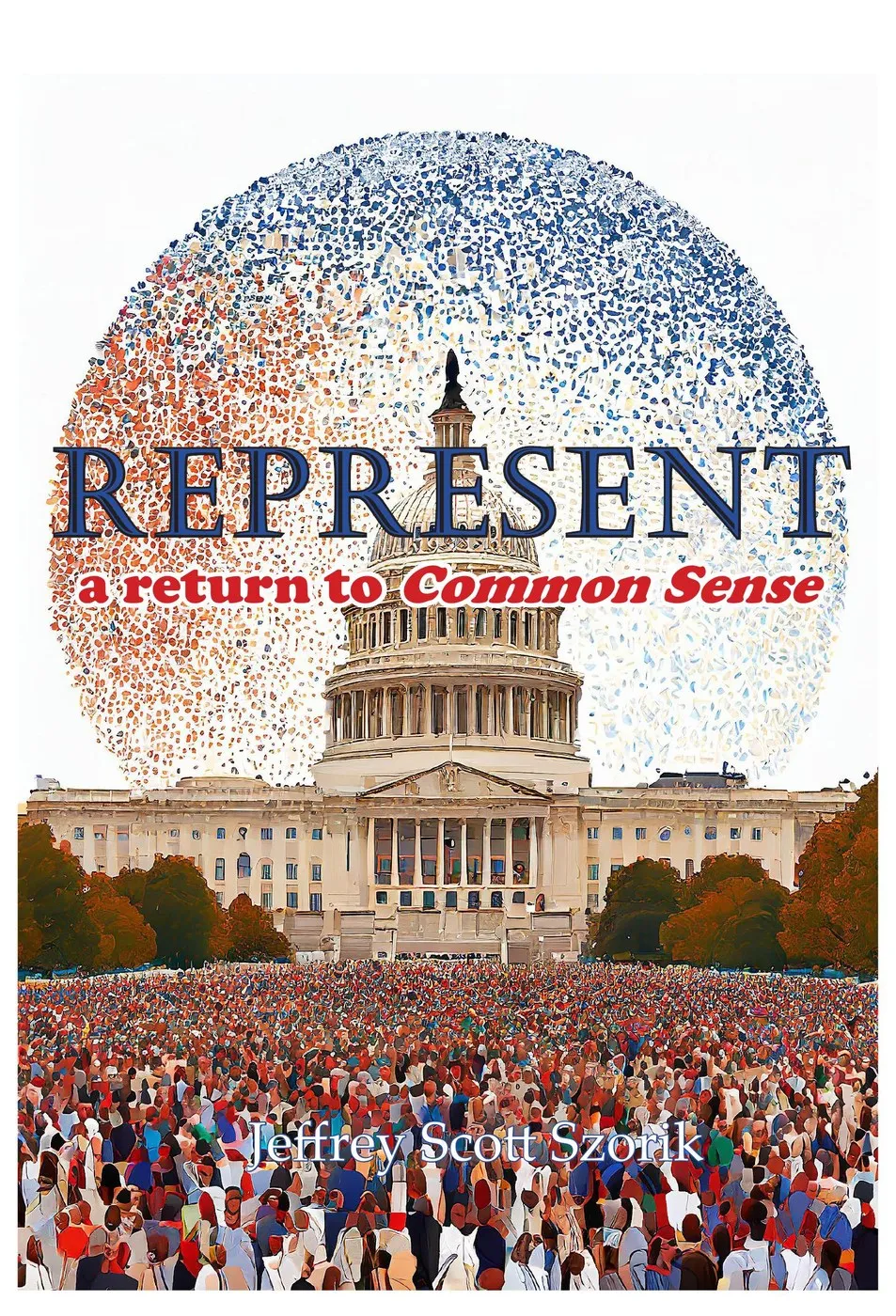
The book behind the instrument.
A point. A line. A 2x2 matrix. A sphere. Which is the best physical model for illustrating the political priorities and preferences of an individual?
The argument this instrument was built to carry out — published in full.
08 · Who, when, where
For citizens now. For institutions next.
Use it today
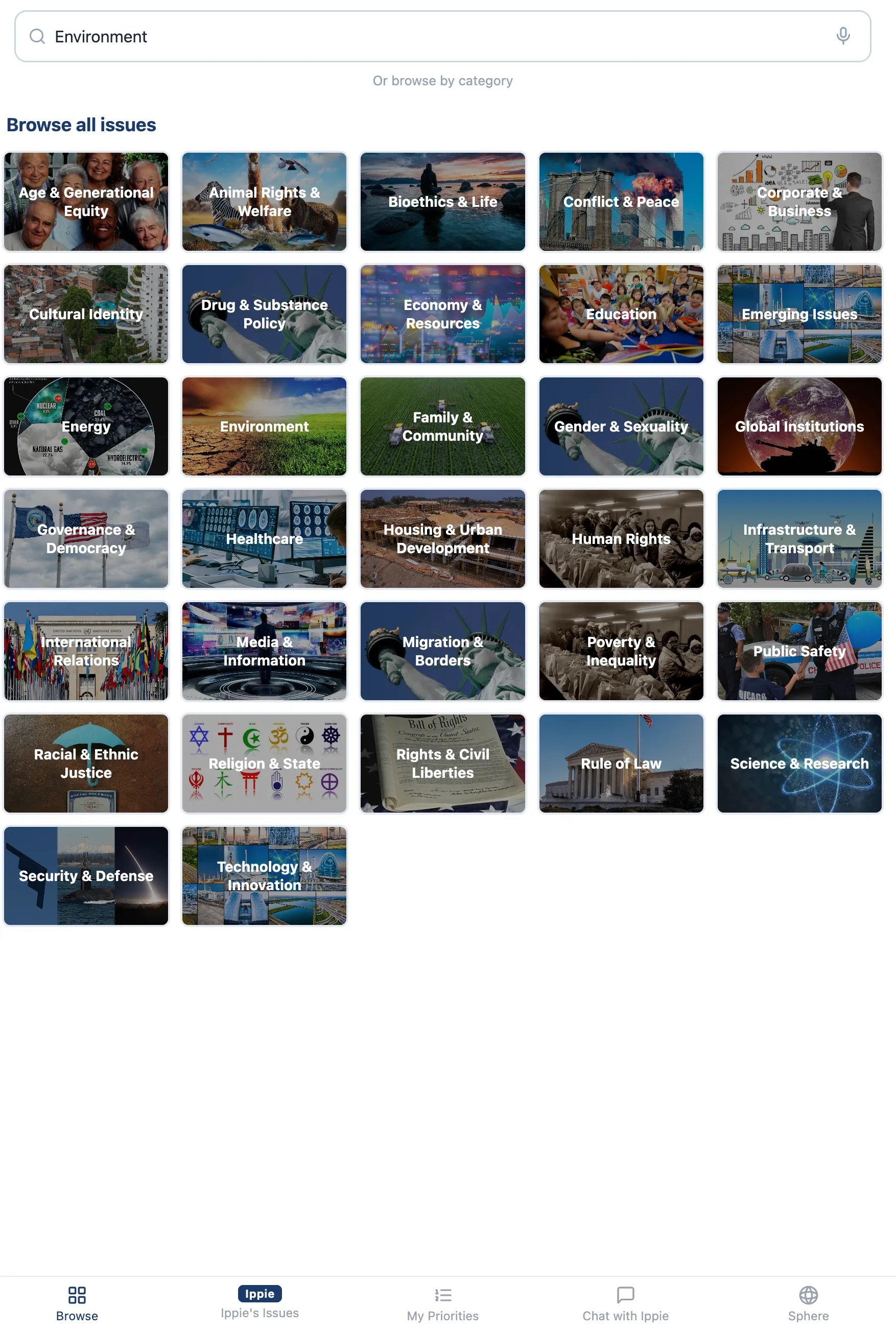
Free, in your browser, on the phone already in your hand. Start anonymously: answer a question, place a position, look around. Register only when you want to keep your record — and it stays yours when you do.
Working with VotesphereFor newsrooms, researchers, agencies, and public institutions: Opinion research & media · Government & NGOs